

BLOG
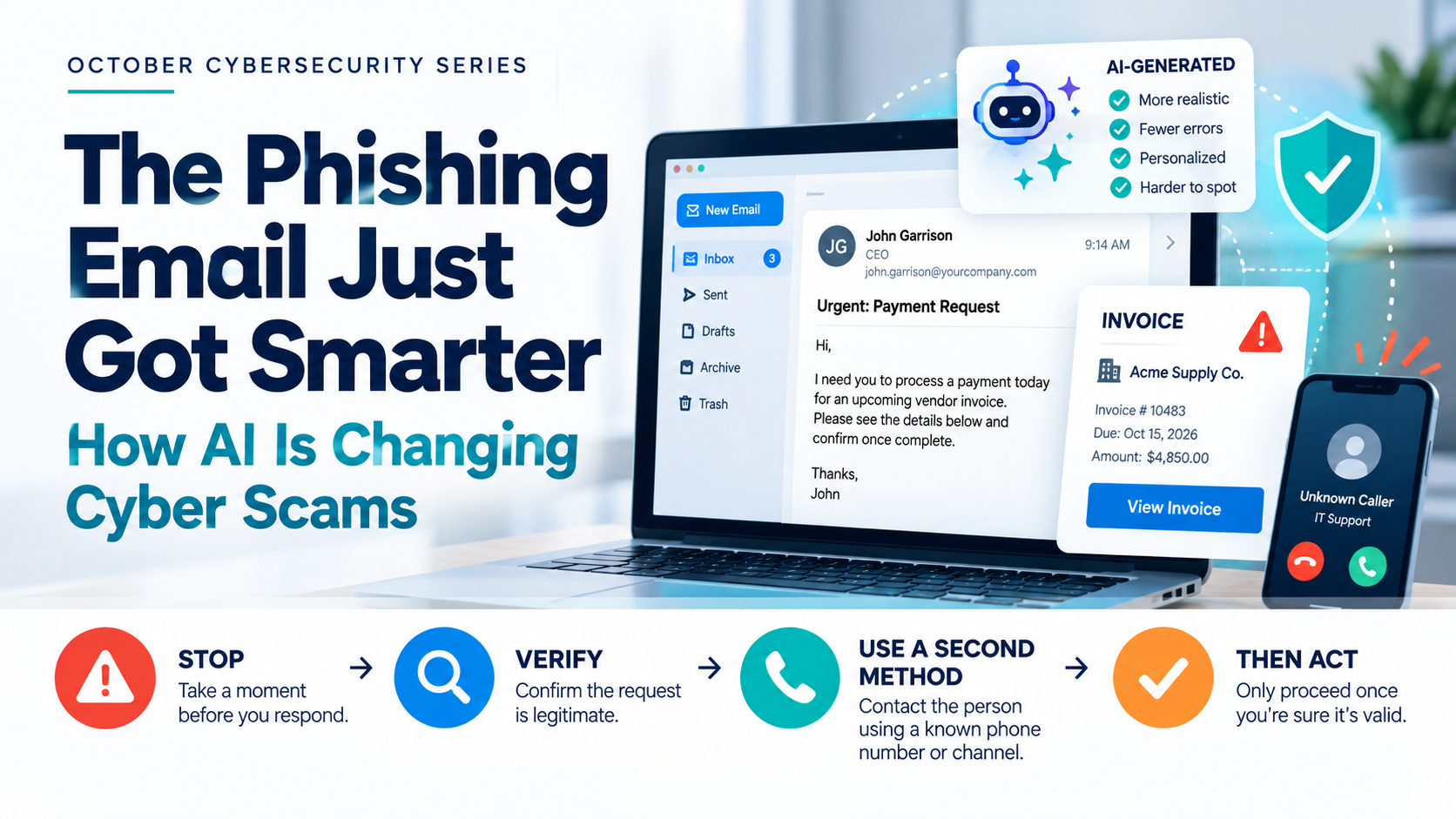
The Phishing Email Just Got Smarter: How AI Is Changing Cyber Scams
For years, one of the easiest ways to spot a phishing email was to notice something looked wrong.
The grammar was bad.
The wording was awkward.
The logo looked strange.
The request did not sound like something your boss, vendor, or customer would normally send.
That is getting harder.
AI is making it easier for attackers to create emails, text messages, fake invoices, and even voice messages that look and sound much more believable.
That does not mean every phishing attack is suddenly sophisticated.
It does mean the old advice of “look for bad spelling” is no longer enough.
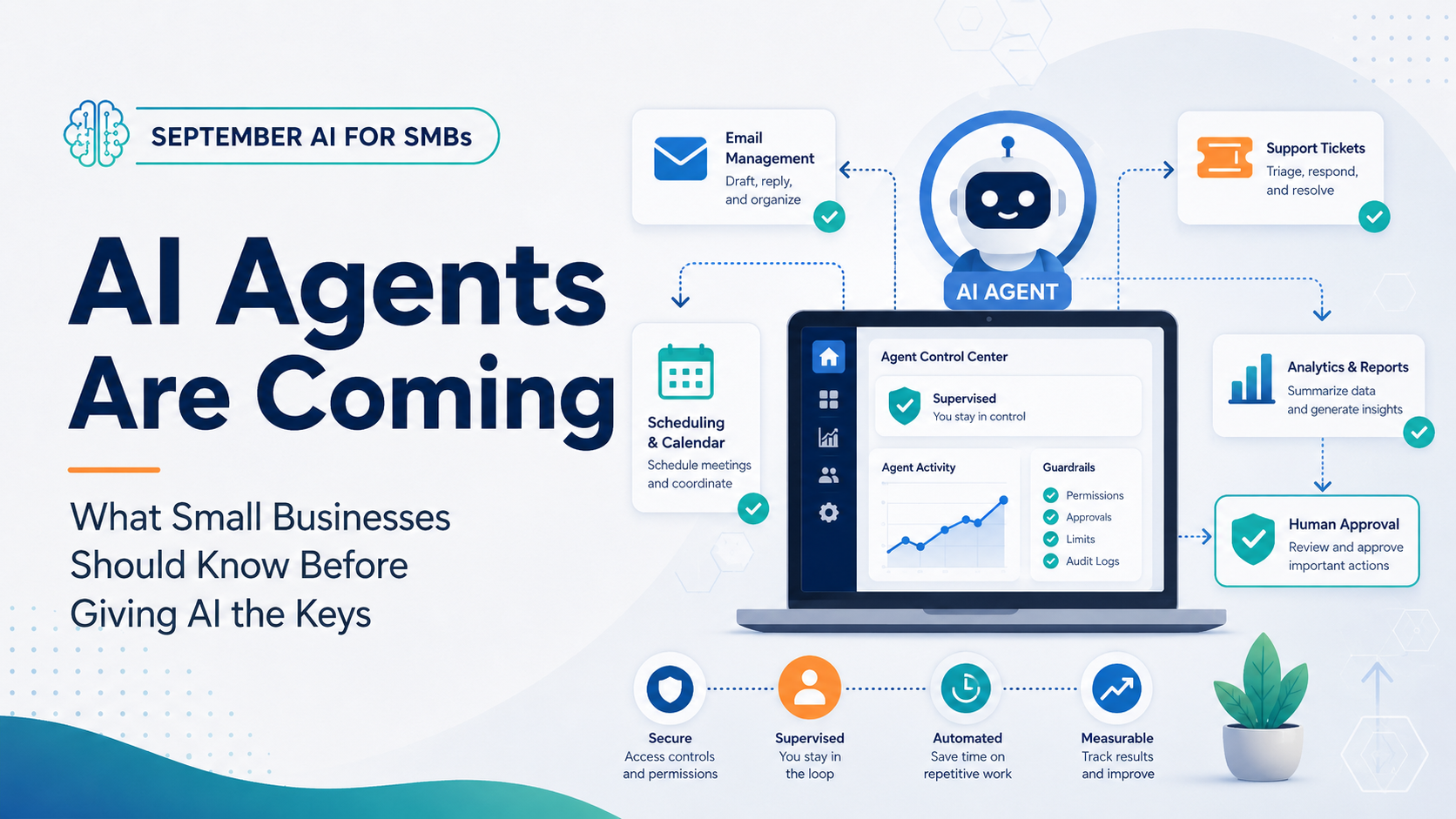
AI Agents Are Coming: What Small Businesses Need to Know Before Giving AI the Keys
Most people are starting to understand AI assistants.
You ask a question.
AI gives you an answer.
You ask it to write something.
It gives you a draft.
AI agents are the next step.
Instead of just helping with a task, an AI agent can potentially take action across multiple systems and complete parts of a process for you.
That is where things start getting much more interesting for small businesses.
It is also where businesses need to be careful.
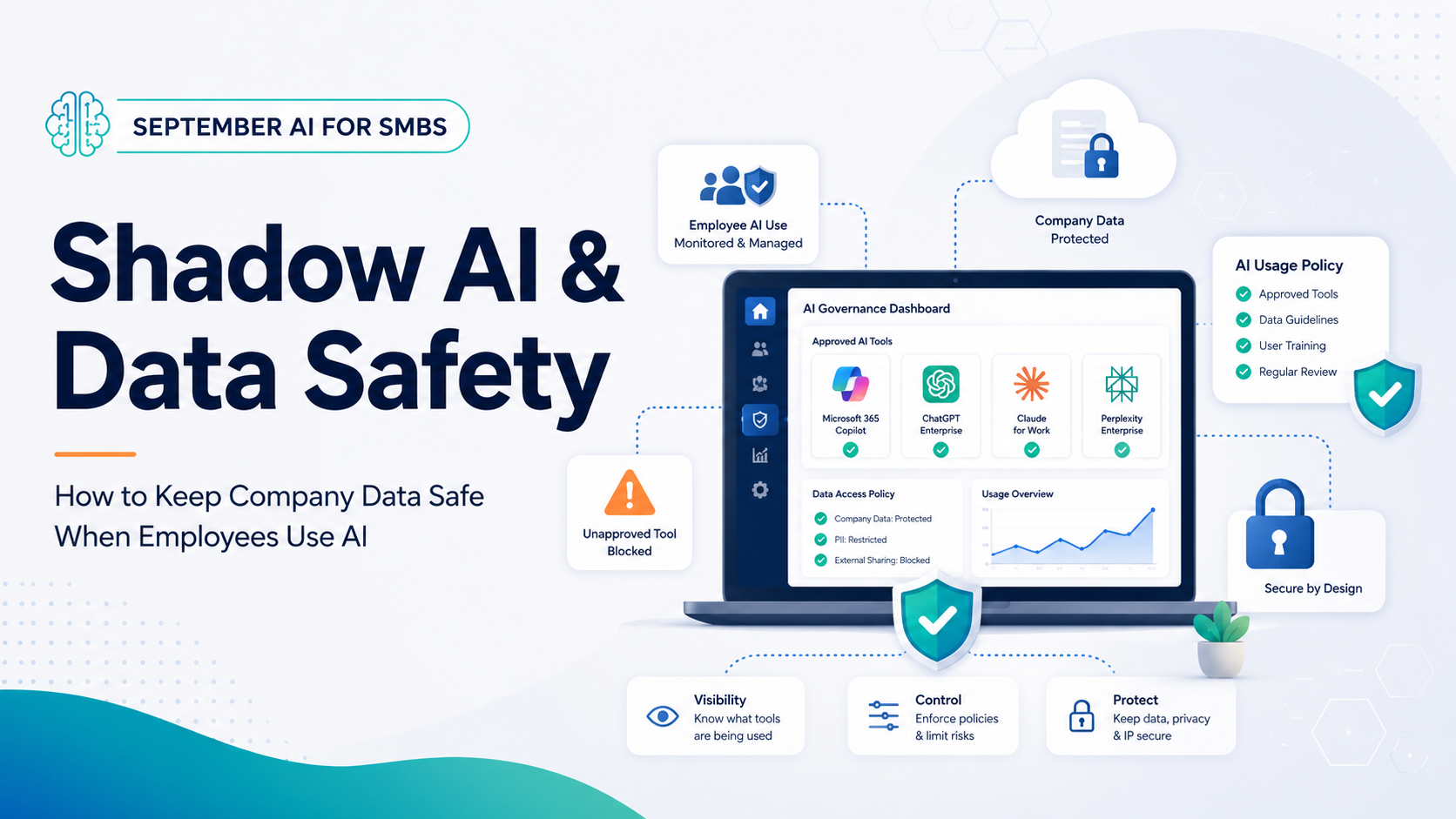
Your Employees Are Already Using AI: Here’s How to Keep Company Data Safe
One of the biggest AI conversations businesses need to be having right now is not whether employees should use AI.
It is whether they are already using it.
In most companies, the answer is probably yes.
Employees are using ChatGPT, Copilot, Gemini, Claude, Perplexity, AI meeting tools, browser extensions, and dozens of other applications to help with everyday work.
That is not necessarily a bad thing.
The problem starts when the business does not know what is being used, what information is being entered, or where that information may be going.
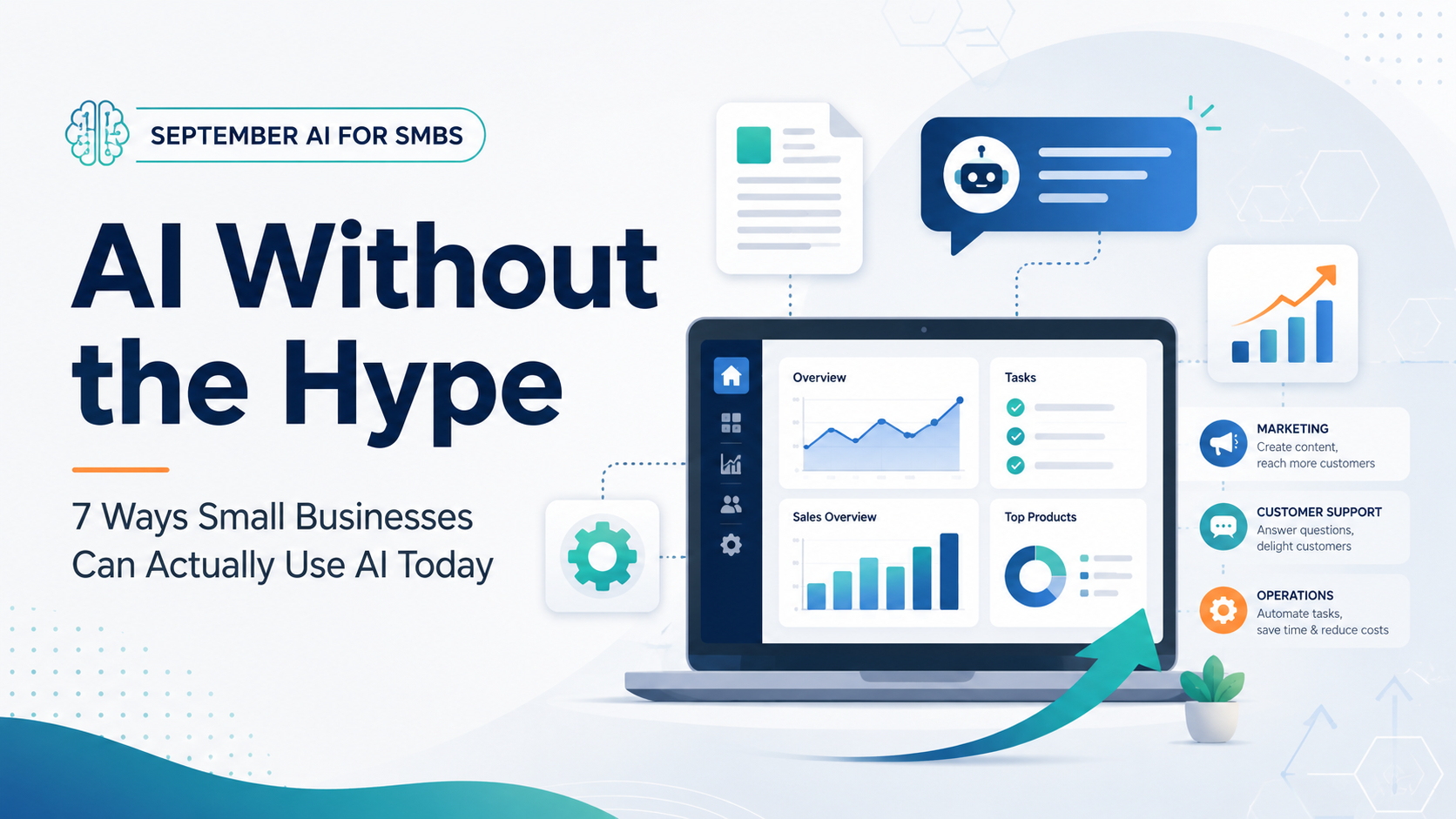
AI Without the Hype: 7 Ways Small Businesses Can Actually Use AI Today
AI is everywhere right now, and depending on who you talk to, it is either going to completely change the world or replace half the jobs in it.
For most small businesses, that is not really the conversation that matters.
The better question is:
Can AI save us time, help employees work better, or improve the customer experience?
In a lot of cases, the answer is yes.
You do not need a huge AI budget, a development team, or a complicated rollout to start seeing value. The best place to start is usually with small, repetitive tasks that already take up too much time.

Your Business Needs Fewer Surprises, Not More IT Tools
Picture a busy morning. A proposal is almost ready, a customer is waiting and the day feels like it’s on track. Then someone can’t find the file they just saved. Another screen freezes. A task that should take minutes suddenly stalls.
No one panics. People try quick fixes or move on to something else. But the rhythm is broken. What should have been a smooth handoff turns into waiting, rework and frustration.
These moments are easy to dismiss. They don’t feel like downtime. But over time, they chip away at productivity and focus. Often, the real issue isn’t the glitch itself. It’s the pause that follows, when no one is sure what to do next.
If a file disappeared or a system stopped working today, would your business keep moving, or would everything slow down while someone figured it out?

The Hidden Yet Easily Preventable Causes of Downtime
When you hear the word downtime, what comes to mind? You might imagine a major storm, a power grid failure, a data breach or a sophisticated cyberattack. These are dramatic events, and while they do happen, they’re not the most common reasons why work grinds to a halt.
In reality, downtime is rarely dramatic. It’s usually something small and ordinary, the kind of issue that doesn’t seem serious at first but still brings work to a standstill. These quiet problems are the ones most likely to disrupt the day.
Even a short interruption has an immediate impact on your bottom line. A single stalled project or a delayed decision can mean missed opportunities and frustrated customers. The cost is not in the event itself, but in the time lost while your team waits for a solution.

The Productivity Payoff: What You Gain When AI Is Done Right
You know the feeling. Your team is working hard, but hours are burned without much impact. Manual tasks eat into time that could be spent driving revenue and growth. For many small and medium-sized businesses, this is the daily grind.
Now imagine a different picture: processes run smoothly, customer requests get handled faster and your team spends more time on strategy and less on repetitive work. That’s what happens when artificial intelligence (AI) is implemented correctly. Done wrong, it adds to the complexity. Done right, it becomes a tool that makes your business sharper, faster and more competitive.
So, what does “done right” look like? Let’s break it down

How AI Can Help Businesses Scale Without Adding Complexity
Growth should feel exciting, not overwhelming. But for many business leaders, scaling means juggling more customers, more tasks and more moving parts. The result? Teams spend more time chasing updates than driving real progress.
This is where artificial intelligence (AI) changes the game. When implemented correctly, AI reduces routine tasks, supports faster decision-making and streamlines operations, allowing you to scale efficiently without chaos.
In this blog, we’ll explore why businesses feel the strain as they grow, how AI eases the load, where it makes the biggest impact and how the right partner keeps AI simple and effective.

The Hidden Risks of DIY AI: What Businesses Miss Without an IT Partner
AI promises big wins, but without the right approach, it can backfire.
Efficiency, time savings and innovation are what every business leader wants from an artificial intelligence (AI) solution. And yes, the opportunity is real. AI is reshaping how businesses operate at every level. But here’s the catch: AI isn’t a plug-and-play tool. It’s more like hiring a new team member who needs clear goals, quality data and strong security rules.
Skip those steps and what feels like a quick win can turn into a costly mess of misconfigurations, security gaps and underperforming tech. That’s why going DIY with AI is riskier than most businesses realize.

Understanding AI-Powered Cyber Threats: Essential Information and Our Support Solutions
Cybercriminals are using artificial intelligence (AI) to create scams that look real, sound real, and move at lightning speed. From fake CEO voices to cloned websites, these attacks are designed to fool even the most cautious business owners — and the consequences can be devastating. One successful breach can drain your finances, damage customer trus,t and halt operations.

Emerging Technologies in Cybersecurity: Exploring the Future of Digital Defense
The digital world is rapidly transforming, and with it, new technologies emerge that shape the future of cybersecurity.

Understanding the Risks and Mitigation Strategies for Supply Chain Attacks
An emerging threat is the supply chain attack, a sophisticated strategy that targets less-secure elements in a network to compromise a more secure system.

Top 5 IT Trends for Arkansas Businesses in 2023
The world of technology is ever-evolving, and businesses in Arkansas are no exception. In 2023, there are several new trends in technology that are expected to have a significant impact on the way businesses operate.