

BLOG
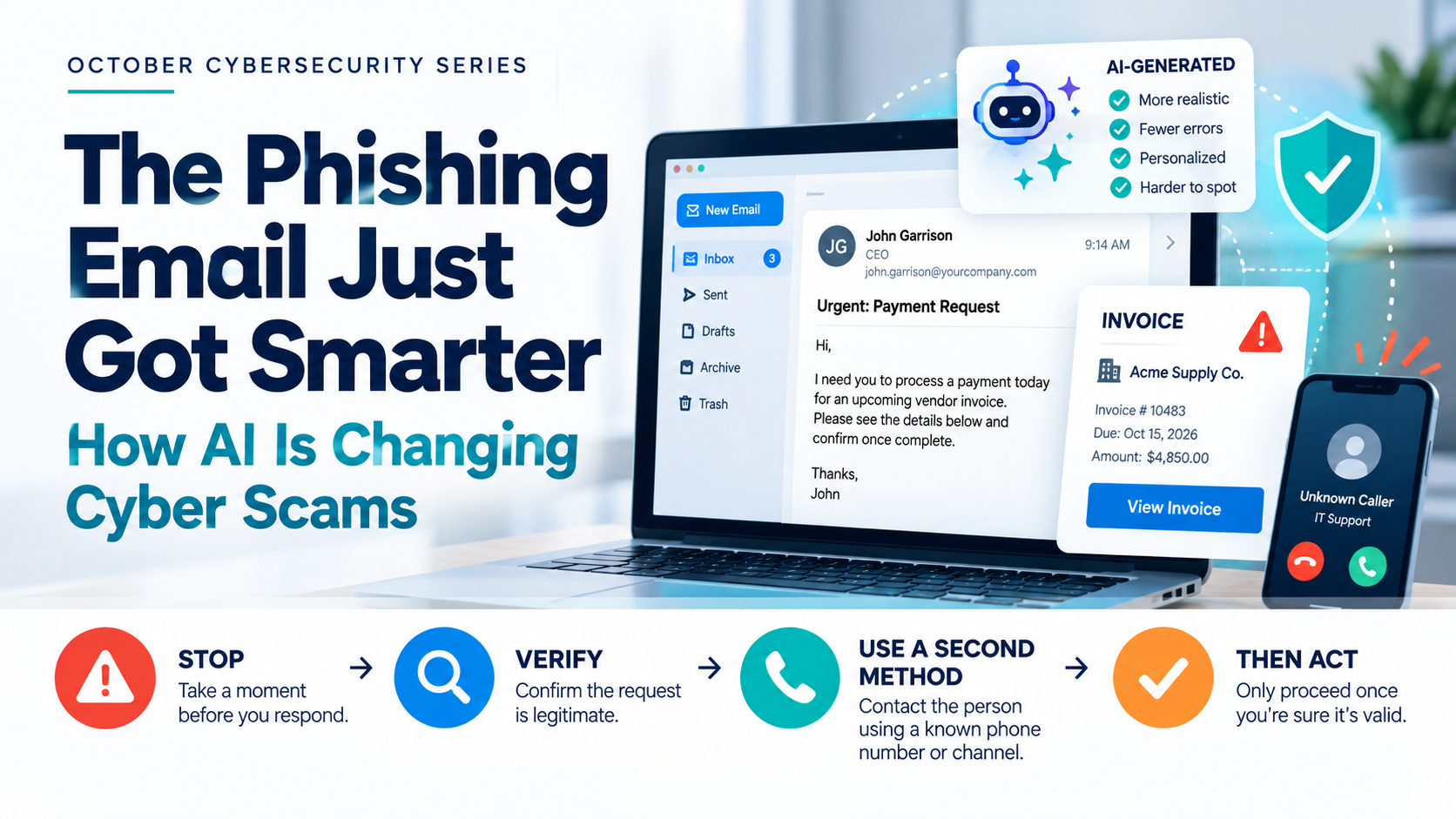
The Phishing Email Just Got Smarter: How AI Is Changing Cyber Scams
For years, one of the easiest ways to spot a phishing email was to notice something looked wrong.
The grammar was bad.
The wording was awkward.
The logo looked strange.
The request did not sound like something your boss, vendor, or customer would normally send.
That is getting harder.
AI is making it easier for attackers to create emails, text messages, fake invoices, and even voice messages that look and sound much more believable.
That does not mean every phishing attack is suddenly sophisticated.
It does mean the old advice of “look for bad spelling” is no longer enough.
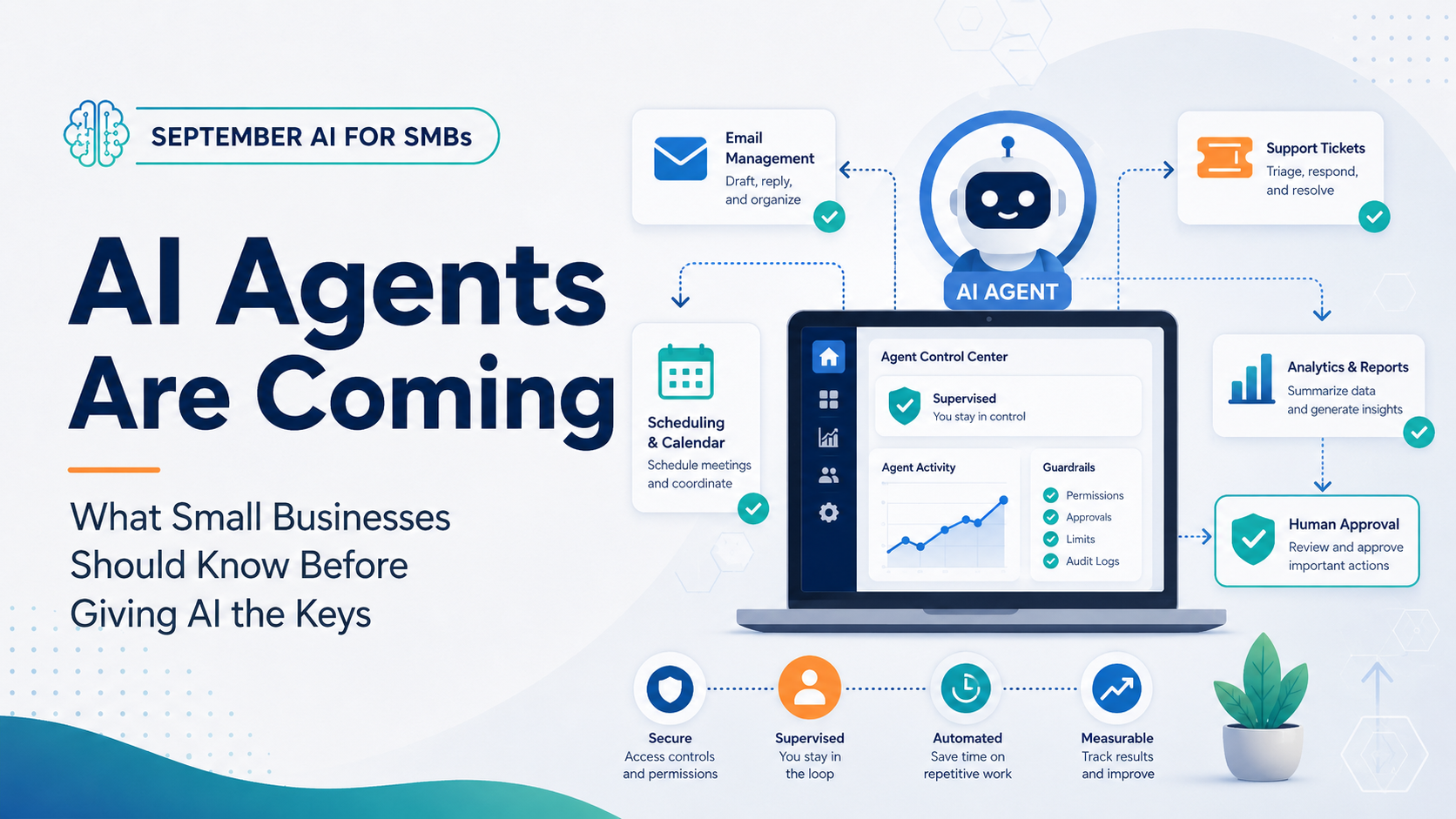
AI Agents Are Coming: What Small Businesses Need to Know Before Giving AI the Keys
Most people are starting to understand AI assistants.
You ask a question.
AI gives you an answer.
You ask it to write something.
It gives you a draft.
AI agents are the next step.
Instead of just helping with a task, an AI agent can potentially take action across multiple systems and complete parts of a process for you.
That is where things start getting much more interesting for small businesses.
It is also where businesses need to be careful.
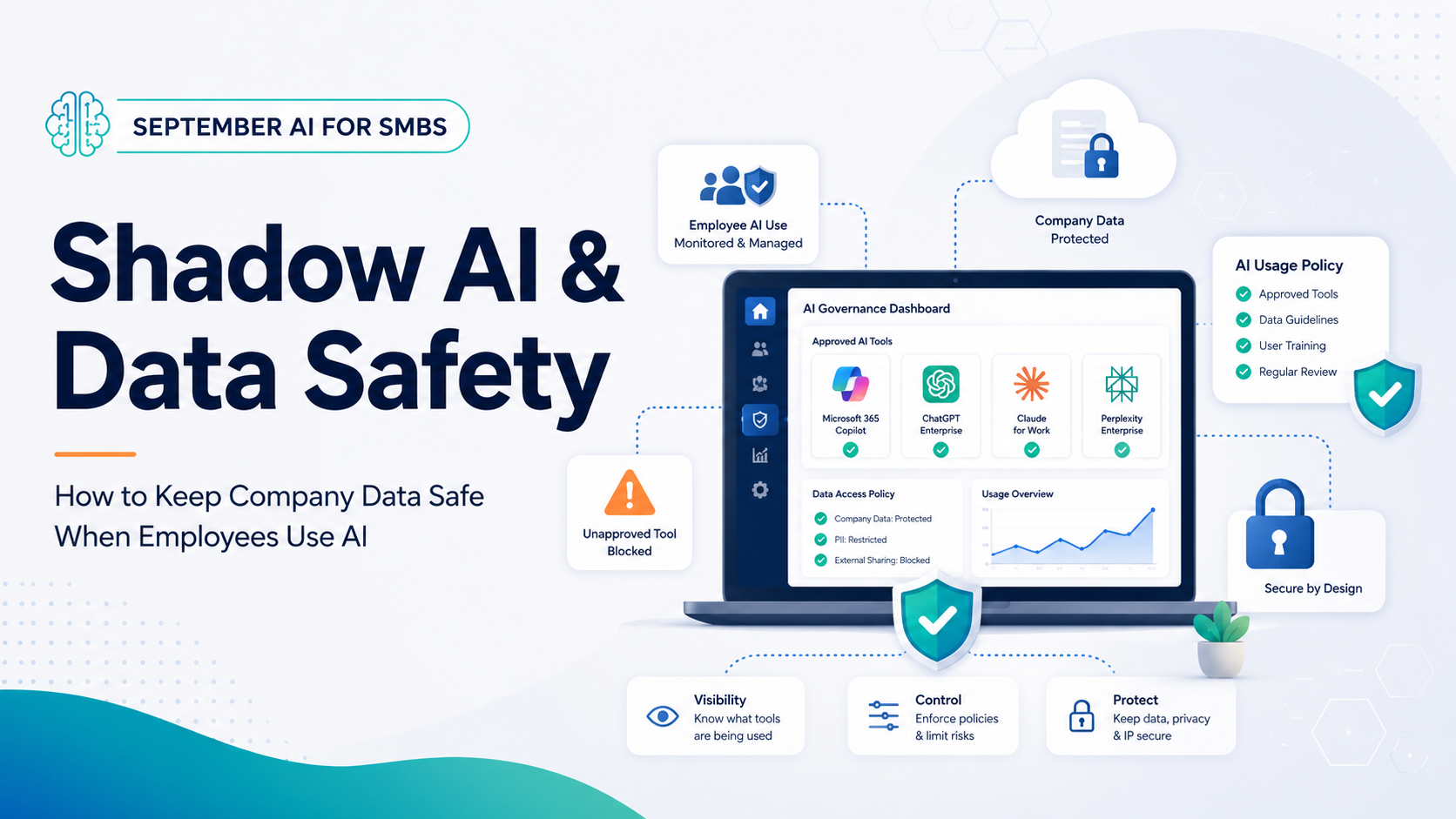
Your Employees Are Already Using AI: Here’s How to Keep Company Data Safe
One of the biggest AI conversations businesses need to be having right now is not whether employees should use AI.
It is whether they are already using it.
In most companies, the answer is probably yes.
Employees are using ChatGPT, Copilot, Gemini, Claude, Perplexity, AI meeting tools, browser extensions, and dozens of other applications to help with everyday work.
That is not necessarily a bad thing.
The problem starts when the business does not know what is being used, what information is being entered, or where that information may be going.
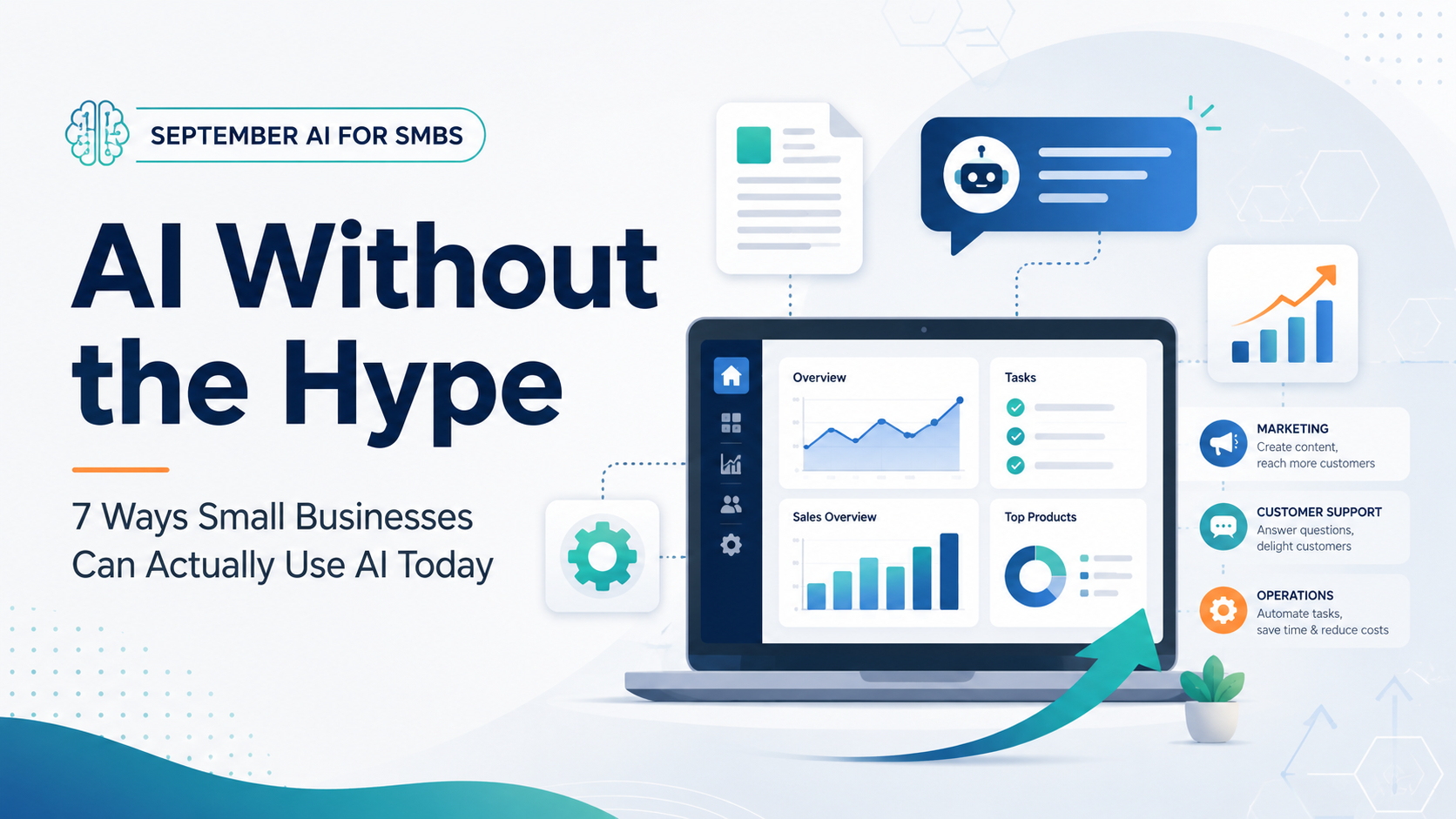
AI Without the Hype: 7 Ways Small Businesses Can Actually Use AI Today
AI is everywhere right now, and depending on who you talk to, it is either going to completely change the world or replace half the jobs in it.
For most small businesses, that is not really the conversation that matters.
The better question is:
Can AI save us time, help employees work better, or improve the customer experience?
In a lot of cases, the answer is yes.
You do not need a huge AI budget, a development team, or a complicated rollout to start seeing value. The best place to start is usually with small, repetitive tasks that already take up too much time.

What AI Can't Do When Your Systems Go Down
Most businesses spend big money on tools that tell them when something is wrong. Recovery planning gets significantly less attention.
Think of this like a fire alarm. A fire alarm will alert you to danger, but it won’t extinguish or prevent the fire. It can't protect your building or belongings or get people to safety.
It does, however, give you time. But whether the incident is contained or spreads depends on the preparation and safeguards you already have in place.
Similarly, AI monitoring tells you a server is down, flags unusual activity and alerts you to a failed backup. What it can't do is mitigate the cost of an hour of lost productivity or the impact of having your team sit idle while they wait for direction.
For a growing business like yours, what happens after the alert often comes down to one thing: how quickly you're able to recover after an incident.

Downtime Doesn't Just Cost Money. It Costs Trust.
Every minute of downtime has a cost you can measure and one you can’t.
Your team sees a technical problem with a fix and a timeline. Your customers see a business that wasn’t there when they needed it, and they start wondering whether that will happen again.
While systems can be back online in hours, that question can linger longer.
Here’s how the damage of downtime spreads and why recovery is about more than just your technology.

Think Your Cloud Data Is Safe? Think Again.
Think Your Cloud Data Is Safe? Think Again.
Many businesses store their files in Microsoft 365 or Google Workspace and assume that’s all the data protection they need. It isn’t.
A cloud platform keeps your business connected and productive. But connected and protected aren’t the same thing. When files are deleted, overwritten or encrypted by ransomware, your cloud platform isn’t designed or obligated to get them back. That’s your job.
This is what’s known as shared responsibility. Your cloud provider keeps the platform running and the infrastructure secure. Protecting and recovering your data falls on you.
The risks are more common than most businesses realize. Here’s what you’re up against.

5 Ways Skipping Backup Testing Can Disrupt Your Business
Most businesses trust their backups completely, right up until the moment they don’t work.
If you’ve never tested yours, you don’t know what you have. You have a file sitting in storage, and you’re assuming it’ll come through when you need it. That’s not a recovery plan.
Testing your backups shows whether your systems, files and recovery plans can keep your business running when something goes wrong. Skip the tests, and your first live restore becomes your first live drill with no room to fail.
Here are five major risks you’re taking when backup testing isn’t on the calendar.

4 Signs Your Access May Be Out of Control
4 Signs Your Access May Be Out of Control
When a business grows, systems access grows with it.
You hire new people, bring in contractors or move someone into a different role, and you give them the logins and permissions they need to get to work. But those logins and permissions don’t always get removed when the project ends, the contractor leaves or the role changes.
Most likely, no one is consistently tracking which permissions are still active, and as a result, more people can log into your business than would if you were starting fresh today.
Each of these unused accounts are a potential entry point for attackers, and every unnecessary permission increases the risk of insider misuse whether intentional or inadvertent.
5 Questions Every Business Owner Should Be Able to Answer
You don't need to be an IT expert to run your business, but you must be able to answer a few basic questions about the systems you rely on every single day.
If you can’t answer them with confidence, you have some gaps to close…

6 Risks Your Business Probably Didn't Have at the Start of the Year
January feels like a long time ago, back when the “new year, new me” energy was still going strong.
Since then, a lot has changed. You’ve hired people, added tools and signed on new vendors. Maybe you’ve opened a new location or changed how your team operates. The first half of the year moves fast and when you’re heads-down, it’s easy to miss a few things along the way.
Consider this your midyear check-in — an honest look at six risks that tend to creep in as businesses grow, with a few questions to help you spot if any apply to you.

How to Calculate What an Hour of Downtime Really Costs Your Business
If your systems went down for an hour tomorrow, what would it cost you?
When asked this question, most business owners pause and guess a number that is almost always too low.
The costs of downtime are sneaky and difficult to measure. They don't appear neatly in a report. They scatter across your day in ways that are easy to miss unless you sit down and map them out.
This blog post will walk through a five-minute assessment with four simple components that provides a real number you can plan for.

The Difference Between Having IT and Being Supported
“We’ve got our IT covered.” That’s what most business owners think when nothing’s gone wrong.
What they usually mean is simple: There’s someone to call when things break. Problems get addressed and work continues. It feels like control.
However, fixing problems isn’t the same as being supported. You may have someone ready to respond when something goes wrong, but you’re not set up to prevent those problems in the first place.
That gap often goes unnoticed until something interrupts the business at the wrong moment or you try to step away and realize how much depends on you being present.
That's usually when business leaders start to question what kind of support they really have.

5 Tasks You Should Stop Doing Yourself and Let AI Handle
5 Tasks You Should Stop Doing Yourself and Let AI Handle
For many business owners, the day gets swallowed up by small, repetitive tasks that feel necessary in the moment. You answer basic emails, follow up on routine, manual requests and check in on things that should be fine without you. The issue isn’t that you’re doing too much. It’s that you’re still doing work your business should be able to handle without your constant involvement.
That’s where AI comes in. AI’s true value lies in making your business less reliant on your constant presence. It doesn’t replace decisions that require your judgment, but when set up properly, AI handles the predictable and repetitive tasks that keep pulling you back into the day-to-day details.
Here are the ones to hand off first.

Why Hackers Love When Business Leaders Take Time Off
There’s a quiet pattern that most business owners never connect until it’s too late. When business leaders take time off or step back even briefly, attention drops and risk goes up. Not because your team isn’t capable. Not because something is guaranteed to go wrong. But because cybercriminals are patient, and they look for moments when oversight is minimal and response is slower.
Those moments tend to occur when you’re less available, traveling, on leave or simply not as plugged in as usual.
This isn’t an argument against taking time off. You need it, and your business should be able to function without you hovering over every decision. The real question is whether your business becomes more vulnerable the moment you step back. For many small businesses, the honest answer is yes.
Here’s why those gaps create opportunities for cybercriminals and what a more resilient setup looks like.

5 Things Every Business Owner Should Be Able to Ignore on Vacation
5 Things Every Business Owner Should Be Able to Ignore on Vacation
A friend of yours just got back from a week in Portugal. “Beautiful trip,” she said. The kind of place you’d want to disappear into for a while.
When you asked how it was, she paused. “Honestly? I think I spent more time on my laptop than I did at the beach.”
You’re both business owners, so you nod like that’s just how it goes. But it doesn’t have to be.
Most business leaders don’t take vacations. They just relocate their stress. The problem isn’t dedication. It’s dependency.
A vacation-ready business isn’t one where everything stops while you’re gone. It’s one where everything keeps working without you.
So, here are five things you should be able to completely ignore while you’re away, and what it takes to make that possible.

Tech Acceleration: Risk v Growth
We live in a world where possibilities are endless. From automated cars ferrying passengers to AI systems carrying out surgeries, tech innovations are quickly taking over our lives. The world of business is no different. Machine learning, AI, robotics and automation tools promise an unparalleled level of business efficiency.
Many businesses are rushing to embrace these innovations because they fear being left behind. However, the critical question is: Do you fully understand the technology, including its potential negative consequences?
All evolving technologies come with underlying risks. In this blog, we’ll discuss the dangers of rapid tech acceleration. We’ll also show you how to develop a strategic approach to ensure your technology investments push your business forward while minimizing the associated risks.
Tech Acceleration
Are you feeling like you’re falling behind in today’s digital race? You’re not alone.
The cutthroat business world no longer tolerates “good enough” or subpar technology.
Therefore, it’s time to turn technology into your growth engine, but hasty tech adoption won’t cut it. This is where smart tech acceleration comes in.
Benefits of outsourcing IT
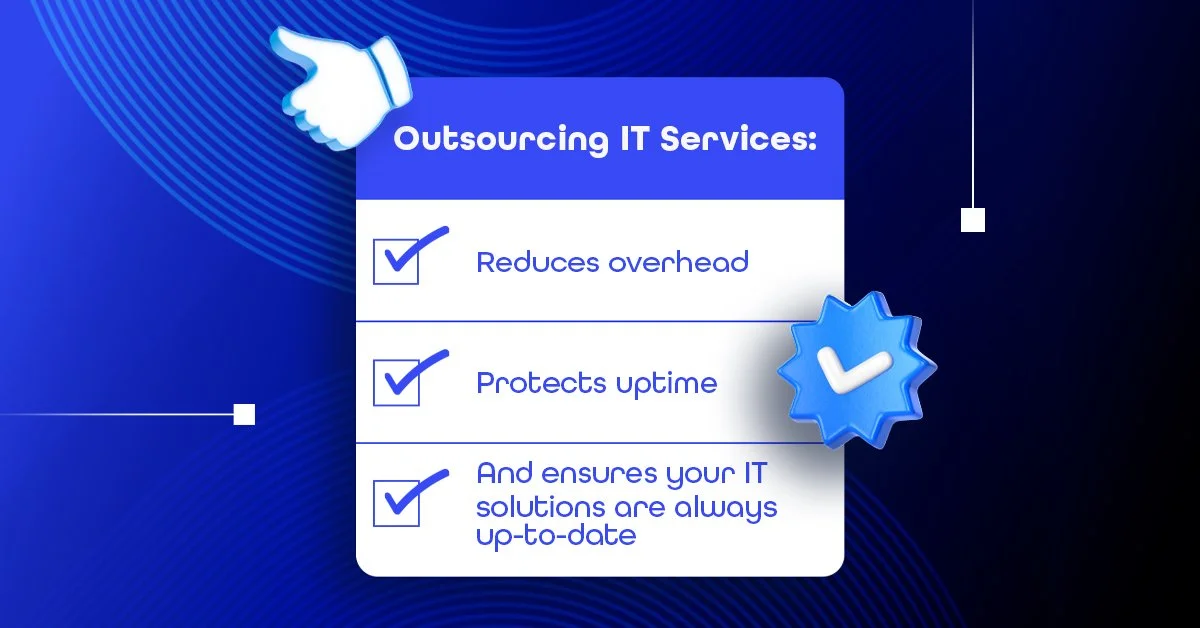
Today's businesses depend heavily on technology for success and growth. However, navigating complex tech issues and ensuring all your systems stay up-to-date can be overwhelming, especially if you have to manage IT on your own.
That's why you need a strategic ally -- a reliable IT partner -- who supports you through thick and thin. In this blog, we'll show you how an exceptional IT service provider works hard to ensure you achieve your business goals.
Good vs. Great
Technology is critical in driving business success in today’s fast-paced digital landscape. However, managing IT infrastructure and systems can be a significant challenge for many organizations.
This is where an IT service provider comes in. But remember that not all IT service providers are created equal.
While a good IT service provider might ensure that your systems are running efficiently, a great IT service provider can elevate your business to new heights.